What Is Virtual Fencing?
Virtual fencing uses GPS-enabled collars, software and animal cues to manage livestock movement without physical fences. Here’s how it works.
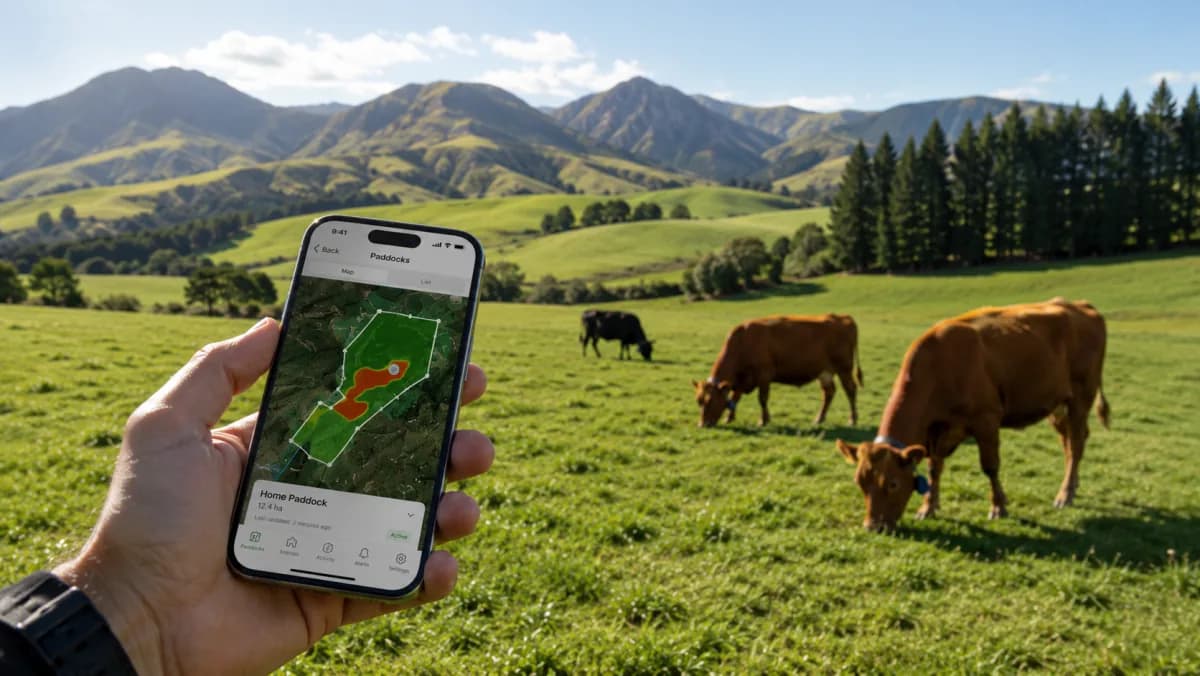
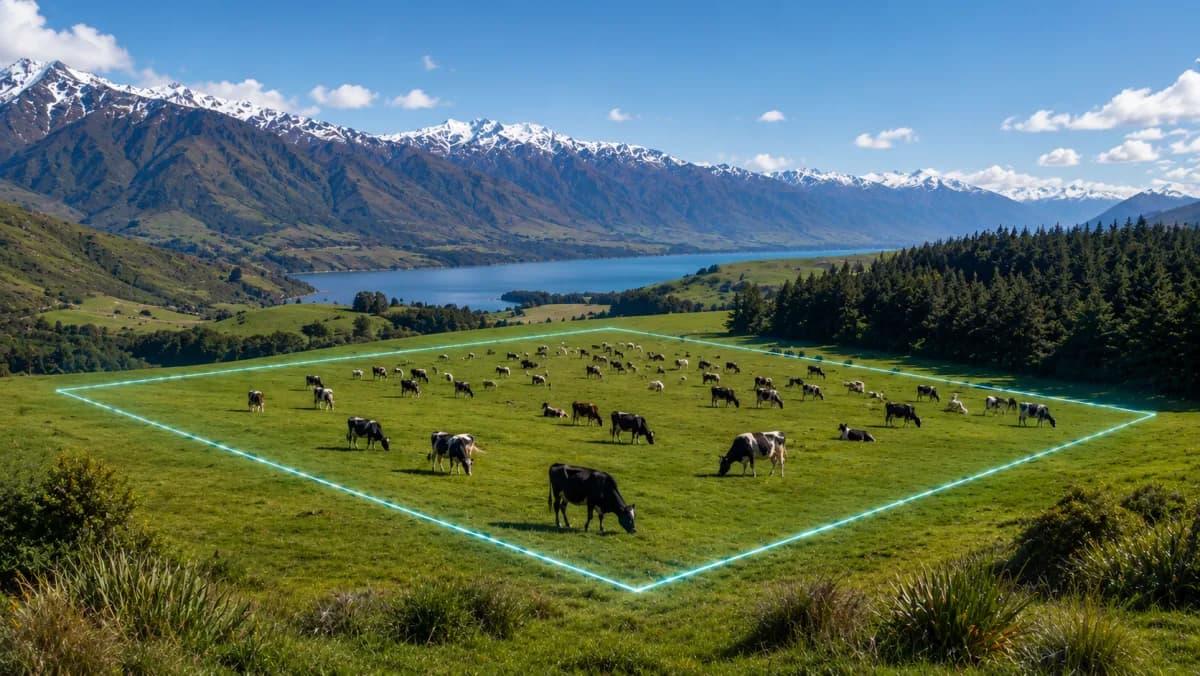
Virtual fencing lets farmers create boundaries for livestock without building or moving a physical fence. Instead of wire and posts, the "fence" is a line drawn in software and the animals are guided by cues from a collar they wear. It is one of the clearest examples of a broader shift towards software-enabled farming and one that is now being adopted across multiple countries.
How it works
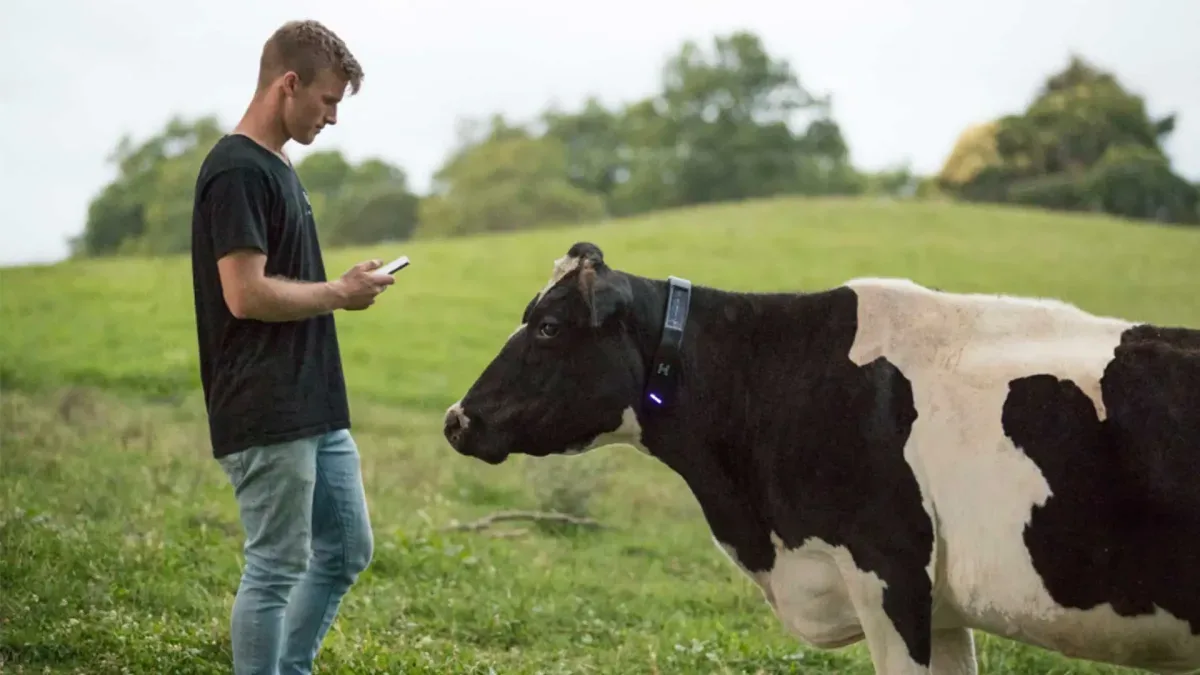
Each animal wears a GPS-enabled collar. The farmer sets a boundary in an app and as an animal approaches that virtual line, the collar gives it a cue, usually a sound, followed by a gentle vibration or mild electrical pulse if it keeps going. Animals quickly learn to turn back at the sound alone, much as a car beeps as it nears a wall when parking. Once the herd understands the cues, the farmer can contain animals, shift them to fresh pasture or keep them away from a sensitive area, all digitally.
The collars are typically solar-powered, connected via cellular or satellite networks and paired with a cloud-based app that lets farmers draw, move or remove boundaries from their phone. Most systems also provide real-time location tracking and basic health or behaviour monitoring.
Why farmers use it
The practical benefits stack up: more flexible grazing, far less manual fencing work, finer control over pasture, easier movement of animals and the ability to monitor stock remotely. On large or rugged land it can be significant and it makes it simple to protect waterways, native bush or other sensitive areas by drawing them out of bounds.
For rotational grazing, moving animals between paddocks on a schedule to let pasture recover, virtual fencing removes one of the main barriers: the time and cost of building and shifting physical subdivisions. A farmer can redraw a paddock boundary in minutes rather than spending a day moving electric tape.
Who else is doing it
Virtual fencing is no longer a single-company story. Nofence, founded in Norway in 2011, was the first commercial virtual fencing company and now has roughly 150,000 collars deployed across Europe and North America, covering cattle, sheep and goats. In the United States, Vence — acquired by Merck Animal Health in 2022, focuses on rangeland cattle operations, offering a lease-based model suited to large herds on open country. In Australia and New Zealand, Halter has become the most prominent player, with a system that extends beyond fencing into pasture and animal-health management.
Each company takes a slightly different approach, Nofence uses audio cues followed by a mild electrical pulse, while Halter relies on sound and vibration without a shock component, but the core concept is the same: replace physical infrastructure with software and data.
What it costs
Collar prices vary by system and scale. Purchase models typically run NZ$400–550 per collar, with an expected lifespan of around five years. Lease or subscription models, where the provider owns the hardware, range from roughly NZ$80–130 per head per year, often including software, support and battery replacements. For a 500-head dairy herd, the annual cost can sit between NZ$40,000 and NZ$65,000 depending on the platform and plan, which needs to be weighed against reduced fencing materials, labour savings and productivity gains from better pasture utilisation.
Is it safe for animals?
Animal welfare is the most scrutinised aspect of virtual fencing and legitimately so. Peer-reviewed research, including studies by CSIRO and an Independent review commissioned by the Australian Government — has consistently found that welfare impacts are minimal when the technology is used correctly. Animals adapt quickly and most learn to respond to the audio cue alone within days, reducing or eliminating the need for further stimuli.
Regulation varies by country. Norway approved Nofence for goats in 2017 and for cattle and sheep in 2020. Australia has conducted formal welfare reviews. In New Zealand, Halter's system, which uses vibration rather than electrical pulse, has been deployed commercially since 2020. The welfare question is not settled universally, but the evidence base is growing and the trend is towards acceptance where proper training protocols are followed.
Limitations and challenges
Virtual fencing is not a universal solution. Animals need a short training period to learn the cues, typically a few days, but this varies by breed and temperament. There are meaningful upfront costs, particularly for smaller operations. Rural connectivity can be patchy, though satellite-connected collars are reducing this barrier. Reliability expectations are high: a fence that fails is a serious problem, whether it is made of wire or software. And not every landscape or farming system suits the technology equally, hill country with dense bush cover, for instance, can challenge GPS accuracy.
Why it matters
Virtual fencing speaks to several pressures at once. Rural labour is harder to find, so reducing manual work matters. Better pasture management improves productivity. Drawing animals away from waterways supports environmental goals and continuous monitoring can flag health issues earlier. It turns grazing from a fixed, physical constraint into something a farmer can adjust day by day.
A New Zealand example: Halter
The best-known New Zealand example is Halter, founded by Craig Piggott in 2016. Its solar-powered collars and app handle virtual fencing alongside pasture and animal-health management and the company has expanded from New Zealand into Australia and the United States, more recently developing direct-to-satellite connectivity to reach areas beyond conventional coverage.
Virtual fencing is part of a wider move towards software-enabled farming, where farmers use data, automation and connected devices to manage land and animals more precisely, explored further in How Halter is turning farms into software-enabled businesses.
Sources: CSIRO · Australian Government independent welfare review · Wikipedia (Nofence) · Merck Animal Health (Vence) · ScienceDirect