Halter: The New Zealand Agritech Startup Changing How Farmers Manage Livestock
Halter is a New Zealand agritech company helping farmers manage cattle, pasture and virtual fencing through solar-powered smart collars and software.

On a pasture-based farm, the most important tool a farmer has is the humble fence. It decides where animals graze, how the land is rested and how much work the day involves. Halter's founding idea was to take that tool and make it virtual and in doing so, it has built one of New Zealand's most significant agritech companies.
Founded in Auckland in 2016, Halter develops solar-powered smart collars and farm-management software that let farmers move cattle, set virtual fences and monitor animal health from a phone. It is a New Zealand story that now plays out on dairy farms in the Waikato and beef ranches in the American West alike.
The problem it solves
Livestock farming is physical, repetitive and time-critical. Moving cattle takes labour. Fixed fences limit how flexibly land can be grazed and rested. Pasture management, getting animals onto the right grass at the right time, has a direct bearing on productivity, yet it is hard to do precisely. And rural labour is under growing pressure, with fewer people available for work that has to happen rain or shine. Farmers need better visibility and control without drowning in admin.
What Halter built
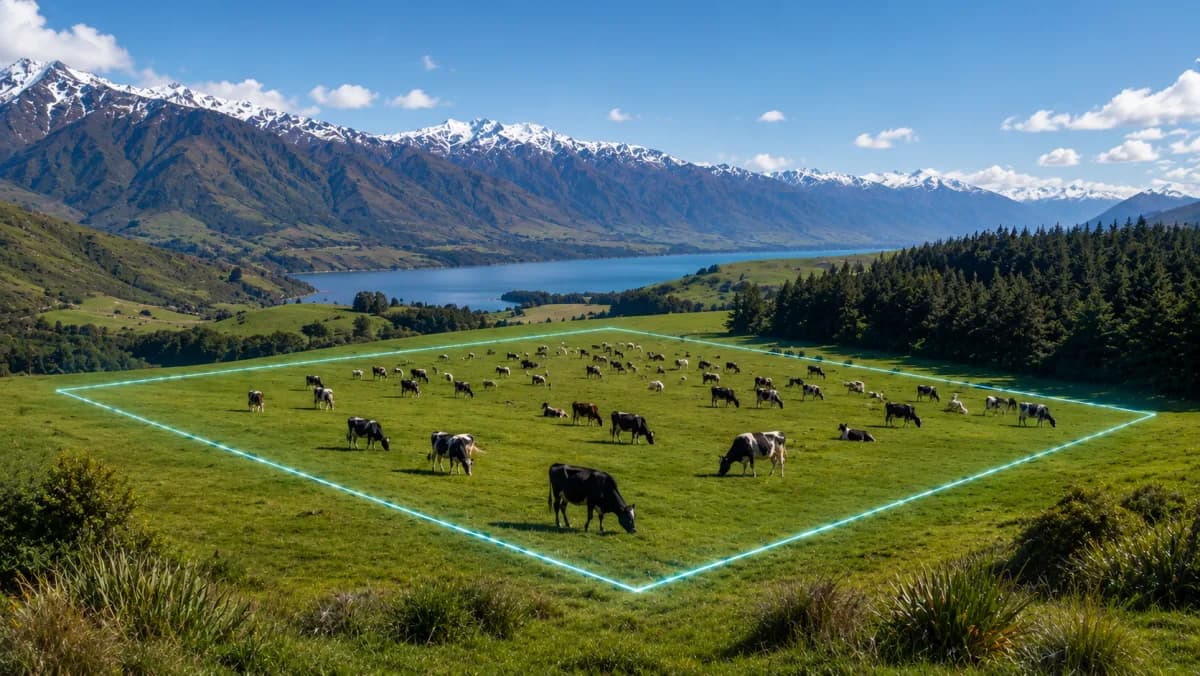
Halter's system combines three things: a lightweight, solar-powered collar worn by each animal; a network of communication towers installed on the farm; and a smartphone app. Instead of a physical barrier, cattle are guided by sound and gentle vibration cues from the collar, a farmer draws a boundary in the app and the herd learns to respect it, typically within a few interactions. The same always-on collar tracks activity, health and behaviour, giving farmers a level of visibility over individual animals they have never had before. In 2026 the company announced direct-to-satellite virtual fencing through One NZ's satellite service powered by Starlink, aimed at extending coverage beyond the reach of conventional connectivity.
The founder
Halter was founded by Craig Piggott, who grew up on a Waikato dairy farm and worked as an engineer at Rocket Lab before returning to agriculture with a systems-level idea. He has built the company alongside a leadership team including president Andrew Fraser, chief operating officer Mark MacLeod-Smith and product and engineering lead Andrew McLaren.
Why farmers adopt it
The appeal is practical. Halter offers more flexible grazing, less manual moving of stock, better pasture utilisation and clearer visibility of every animal, all managed from a phone rather than on foot or on a bike. The collars are solar-powered, so there are no batteries to swap. For farms under labour pressure, the time saved is the headline benefit.
Global expansion
From its New Zealand base, Halter has expanded into Australia and, from 2024, the United States, adapting the system for large beef ranches that operate very differently from New Zealand dairy farms. By the company's own account it now serves more than 2,000 farmers and ranchers and has shipped around a million solar-powered collars, with announced plans to expand into the United Kingdom, Ireland and South America. In 2026 it raised a US$220 million Series E round at a valuation of about US$2 billion, notable in a period when global agritech funding had fallen sharply from its peak.
Why it matters for New Zealand
Halter applies advanced technology to a sector New Zealand understands as well as any country in the world. That combination, deep farming knowledge plus serious engineering, is the basis of a potentially large agritech export and evidence that New Zealand startups can build for global agriculture rather than only for the domestic market. The deeper strategic case is laid out in How Halter is turning farms into software-enabled businesses, and the underlying technology is explained in What is virtual fencing?.