New Zealand Farm Automation Startups
New Zealand farm automation startups are cutting manual work with robotics, sensors, software and AI. Meet the companies leading the shift.

Farm automation is becoming more important as labour pressures rise and the farming workforce ages. Farms need tools that reduce repetitive work and increase control. New Zealand, where agriculture is central to the economy, is a strong testbed for building them. Automation is a specific slice of the wider agritech picture: where agritech includes everything from biology to finance software, farm automation is about reducing manual work and increasing control through technology.
What farm automation includes
The category is broad. It spans virtual fencing, agricultural robotics, pasture and soil monitoring, irrigation control, animal monitoring, greenhouse automation, harvesting tools, compliance and biosecurity workflows and AI-supported decision-making. The common goal is to take work that is repetitive, physical or hard to do precisely and make it easier and more controllable.
The leading example: Halter
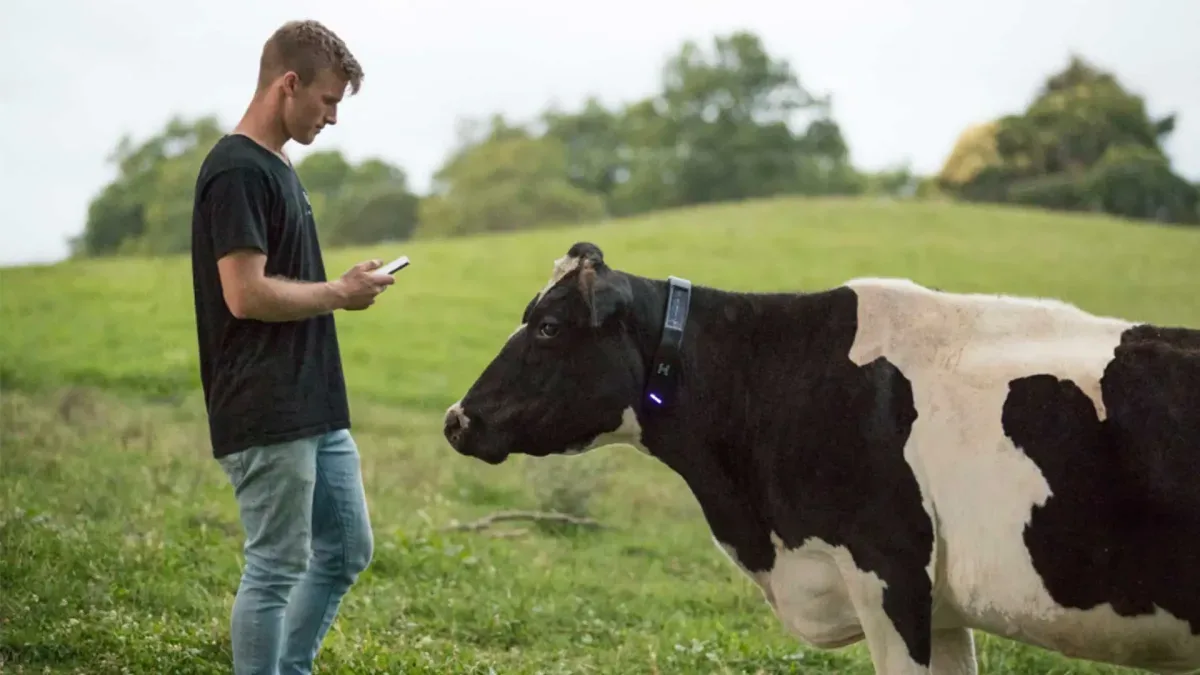
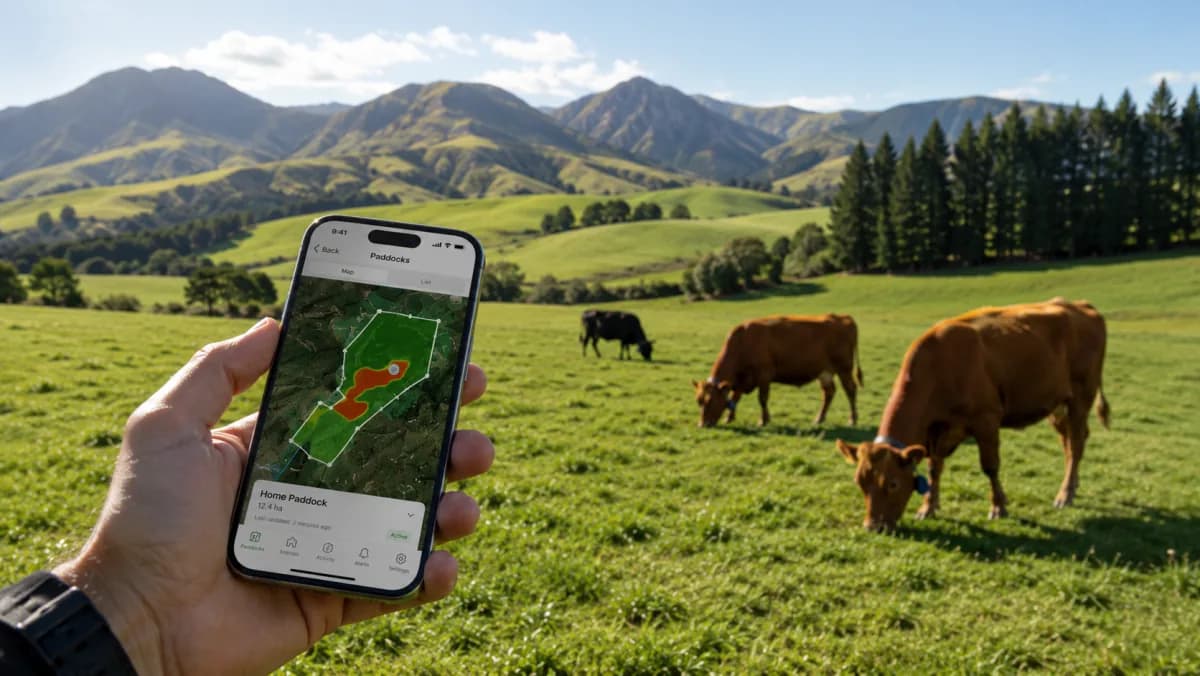
Halter is the clearest New Zealand example. Its solar-powered smart collars, app-based cattle movement, virtual fencing and pasture management automate some of the most labour-intensive parts of livestock farming, while giving farmers continuous visibility of their animals. Founder Craig Piggott built it from a Waikato dairy-farming background and a stint in deep technology, the detail is in What is virtual fencing?.
Other areas to watch
Beyond livestock, several kinds of farm automation are developing in New Zealand. In Agricultural robotics, Tauranga-based Robotics Plus builds autonomous machinery for horticulture and orchards. In Soil and pasture intelligence, companies such as CropX use sensors and data to guide irrigation and land use. In Greenhouse and controlled growing, Autogrow and WayBeyond build automation and data systems for growers. And in Rural workflow software, Onside focuses on compliance, health and safety and biosecurity, the digital plumbing that keeps modern farms running.
Why this matters
The drivers are structural: labour shortages, an ageing farming workforce, productivity pressure, environmental constraints and rising expectations around data and compliance. Automation is one of the few levers that addresses several of these at once.
The point is not to replace farmers. It is to give farmers better tools for the work that already matters and to let a smaller number of people manage land and animals well. For the broader category, see New Zealand agritech companies to watch.