Dawn Aurora: The Spaceplane Aiming to Make Suborbital Flight Repeatable
The Mk-II Aurora is Dawn Aerospace's uncrewed, rocket-powered spaceplane: built to take off from a runway, fly toward the edge of space and land again like an aircraft, ready to fly the same day.

The Dawn Aurora looks, at first glance, like a small jet. That resemblance is the entire point. The Aurora is Dawn Aerospace’s answer to a question most rocket companies don’t ask: what if reaching the edge of space could be a routine flight operation rather than a launch?
What it is
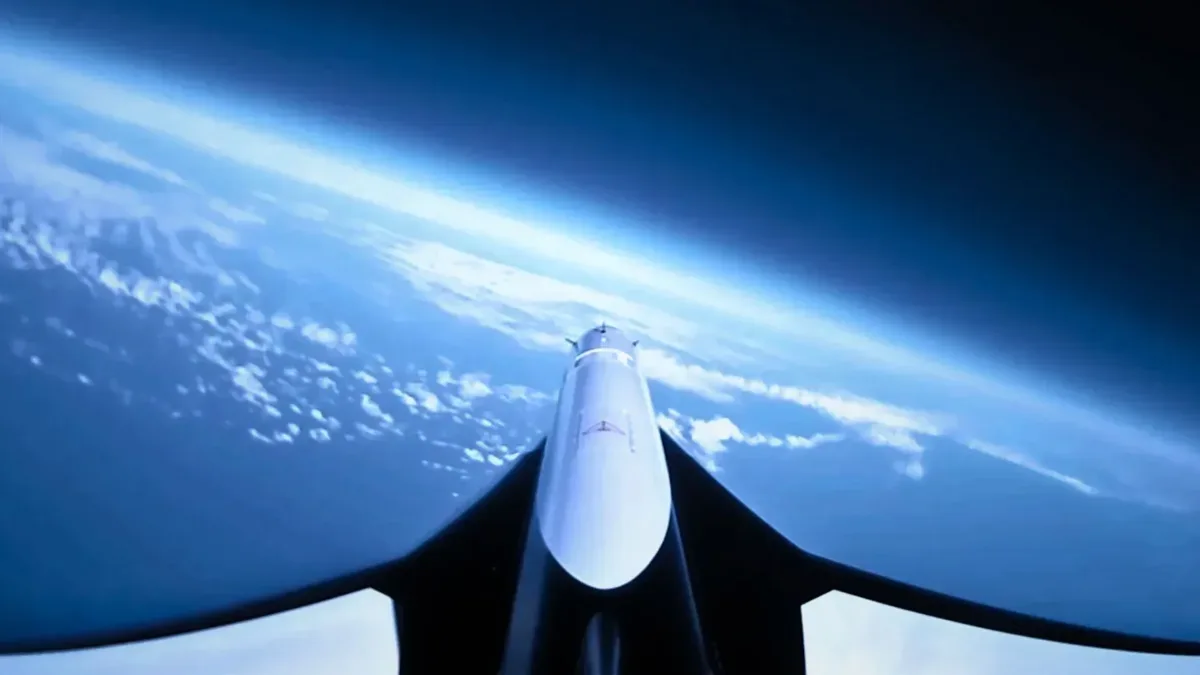
The Mk-II Aurora is an uncrewed, rocket-powered spaceplane. It takes off from a conventional runway, climbs steeply on its rocket engine and is designed to fly to high altitude before gliding back to land like an aircraft. Because it is a rocket rather than a jet, it can fly far higher and faster than any conventional aircraft; because it is built like a plane, it can, in principle, be inspected, refuelled and flown again the same day, rather than refurbished or thrown away.
Why “like an aircraft” is the whole idea
The defining feature isn’t speed or altitude, it’s reuse and cadence. Conventional access to the upper atmosphere and beyond relies on rockets that are largely or wholly expended or on rare, expensive vehicles. Dawn’s intent is to certify and operate the Aurora under aviation-style rules, as a plane, not a one-off launch, so that the limiting factor becomes turnaround time rather than build cost. The stated goal is to be the first vehicle to cross the Kármán line (100 km) twice in a single day. As of the most recent public tests it had flown supersonic to around 82,000 feet and had not yet crossed 100 km. The target captures the operating ambition rather than a current capability.
What it’s for
A repeatable suborbital aircraft is more useful than it first sounds. Its expected uses include microgravity research, atmospheric and climate science, hypersonics testing and carrying instruments or payloads briefly above the atmosphere and back. For researchers and engineers, the value is cadence: being able to fly an experiment regularly and get the hardware back intact, rather than waiting months for a single shot. As Dawn’s founders have noted, getting the vehicle back in one piece, rather than in pieces, is itself the breakthrough.
Where it’s been tested
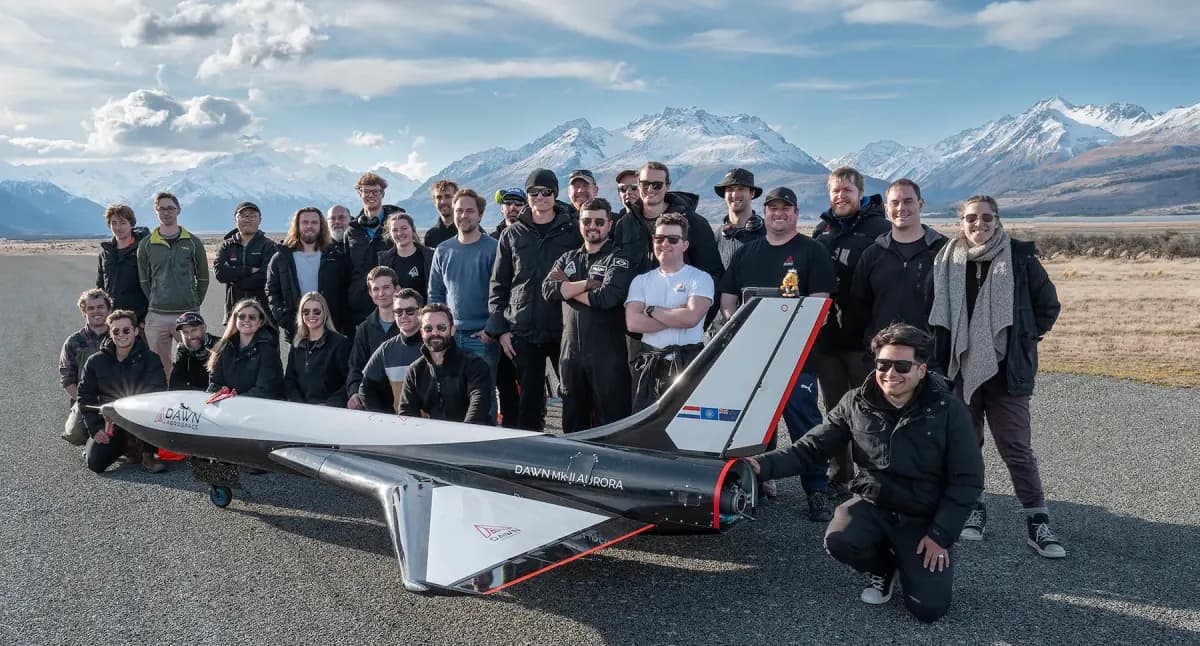
The Aurora’s flight-testing is closely tied to New Zealand. The earlier Mk-I prototype flew and landed near Aoraki/Mount Cook and Mk-II testing has been conducted at sites including Glentanner Aerodrome, taking advantage of the country’s airspace and aviation-certification environment. That certification-led approach, treating the vehicle as an aircraft to be approved and operated, runs through co-founder James Powell’s background in New Zealand aircraft certification.
The honest caveats
The Aurora is a promising test vehicle, not a finished commercial service. Crossing the Kármán line, demonstrating genuine same-day reflight and scaling to a reliable commercial operation are still ahead of it and aerospace is unforgiving of timelines. What makes it noteworthy is less any single record than the operating model it is built to prove, explained in plain terms in What is a spaceplane?.