What Is Precision Fermentation?
The “fermentation” part has been with us for millennia, bread, beer, cheese, yoghurt. The “precision” part means using modern biology to make a microbe.

Precision fermentation is a way of making specific, high-value ingredients, proteins, enzymes, flavours, by programming microbes to produce them, rather than extracting them from animals or plants. It is the technology behind a growing wave of food companies, including New Zealand’s Daisy Lab, and it is far older and more familiar than it sounds.
It’s not new
The “fermentation” part has been with us for millennia, bread, beer, cheese, yoghurt. The “precision” part means using modern biology to make a microbe produce one specific molecule you want. This is already routine in everyday products: most cheese is made with rennet brewed by microbes rather than taken from calves’ stomachs and the same approach produces vanilla flavouring, the sweetener stevia, and, most significantly, insulin, which has been made this way since the 1980s. What’s new is applying it to bulk food proteins, including the proteins found in milk.
How it works
The process runs in roughly five steps. First, choose a target protein, say, a whey protein found in milk. Second, engineer a microbe (often a yeast) with the genetic instructions to produce that protein. Third, ferment: the yeast is grown in a tank and, fed the right nutrients, produces the protein as it multiplies. Fourth, separate and purify the protein out of the mixture. Fifth, check it matches the real thing, the same molecule, with the same behaviour in food. The result can be molecularly identical to the animal-derived version, which is why it’s often called “animal-identical”.
Why it matters
The appeal is that you can make a valuable ingredient without the land, water, animals or emissions of conventional production. For a protein like a dairy whey, that potentially means a familiar food ingredient produced with a much smaller footprint, in a controlled facility, anywhere with the right equipment. It also opens a path for food producers to keep making the products people want while changing how the underlying ingredients are sourced.
The honest limitations
Precision fermentation is promising, not magic and a clear-eyed view matters. Scaling from a laboratory flask to industrial volumes is hard and capital-intensive. Costs need to fall a long way to compete with commodity dairy. Most products require regulatory approval, which varies by country. Consumer understanding and acceptance are still developing and the use of genetically modified microbes draws legitimate scrutiny and differing rules between markets, even though the GM organism is typically contained in the tank and not present in the final ingredient. It is a complement to existing food production for now, not a wholesale replacement for farming.
A New Zealand example
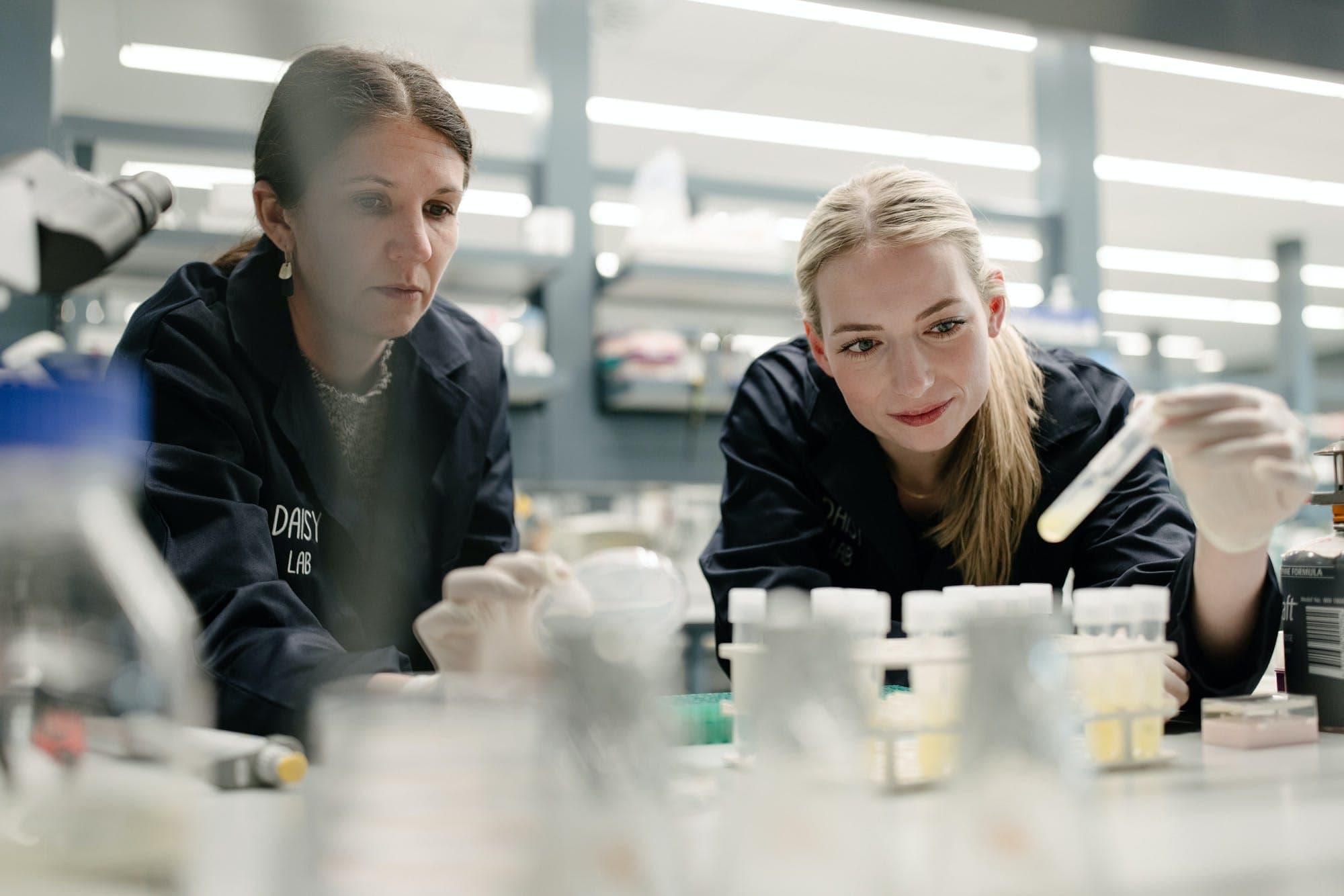
The clearest local example is Daisy Lab, an Auckland company founded in 2021 by Irina Miller, Dr Nikki Freed and Emily McIsaac. It uses precision fermentation to make animal-identical dairy proteins, whey, casein and lactoferrin and in 2024 won EPA approval to scale up its contained production. It’s a useful case study in both the promise of the technology and the practical work of getting it to market and it features among New Zealand food-tech startups to watch.