Leaft Foods: Making Protein From Leaves
Leaft Foods, founded by Maury Leyland Penno and Dr John Penno, extracts Rubisco, the world’s most abundant protein, from green leaves and turns it into a high-value food ingredient grown on Canterbury farmland.

Leaft Foods is a Canterbury company with a deceptively simple idea: take the most abundant protein on Earth, Rubisco, found in every green leaf and turn it into a food ingredient that works as well as animal protein. If it sounds too simple, that’s because the hard part was never finding the protein. It was extracting it in a form that tastes neutral, functions in food and scales commercially. That’s the problem Leaft Foods is solving.
What Rubisco is
Rubisco (ribulose-1,5-bisphosphate carboxylase/oxygenase) is the enzyme that drives photosynthesis. It is, by mass, the most abundant protein on the planet, every green plant produces it. Scientists have known for decades that Rubisco has an amino-acid profile comparable to animal protein, including dairy and egg. The problem was always extraction: pulling a clean, functional protein isolate out of a leaf without it turning brown, tasting grassy or losing its properties. Leaft’s core technology does exactly that.
Who built it
Leaft was founded in 2019 by Maury Leyland Penno and Dr John Penno, two people whose careers sit at the centre of New Zealand’s protein economy. Leyland Penno spent more than a decade at Fonterra in senior commercial roles. Penno co-founded and led Synlait, one of New Zealand’s largest dairy processors and later chaired its board. Together they bring a credibility to alternative protein that most startups in the space lack: they understand the dairy industry from inside and they’re building alongside it rather than against it.
How it works
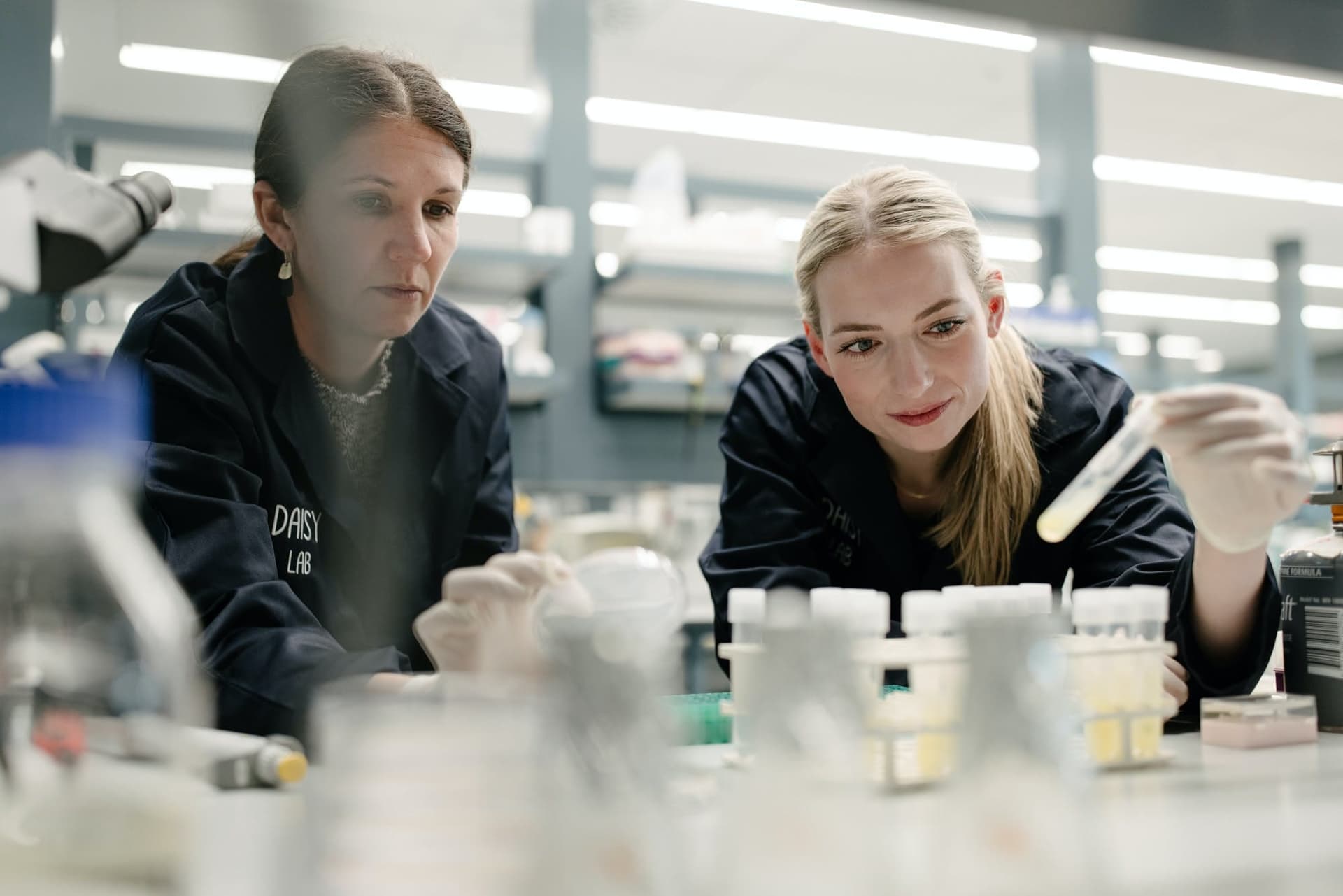
Leaft grows leaf crops, including legumes and grasses, on Canterbury farmland. The leaves are harvested and processed through the company’s extraction technology, which separates the Rubisco protein from the plant material and produces a protein isolate. The result is a white, neutral-tasting powder with high solubility and a complete amino-acid profile. It can be used in sports nutrition, dairy alternatives, baked goods, beverages and functional foods, applications where protein quality and taste neutrality matter.
Where it stands
Based in Selwyn, Canterbury, with around 35 people, Leaft has attracted investment from Khosla Ventures, Ngāi Tahu Holdings and other backers. In 2025 the company signed a commercialisation partnership with Lacto Japan, marking a step from pilot-scale production toward commercial supply in the Japanese market. It is one of a small number of companies worldwide working on leaf protein at this level of seriousness.
Why it matters for New Zealand
New Zealand earns much of its export income from protein, dairy, meat and seafood. But those industries face pressure around land use, water, emissions and market diversification. Leaft offers a different path: a high-value protein produced from crops that can be grown on existing farmland, with a much smaller environmental footprint than animal agriculture. It doesn’t replace dairy; it gives New Zealand another protein to export, using the same agricultural expertise and infrastructure the country already has.
The company’s founders frame it plainly: New Zealand is good at protein. Leaf protein is the next kind.
Sources: Leaft Foods · NZ Herald · Stuff