How a Volunteer Group Helped Win New Zealand's 1.5-Metre Rule
Most road-rule changes arrive without a face attached. New Zealand's new 1.5-metre passing rule has one: an Auckland father who nearly gave up cycling for good.
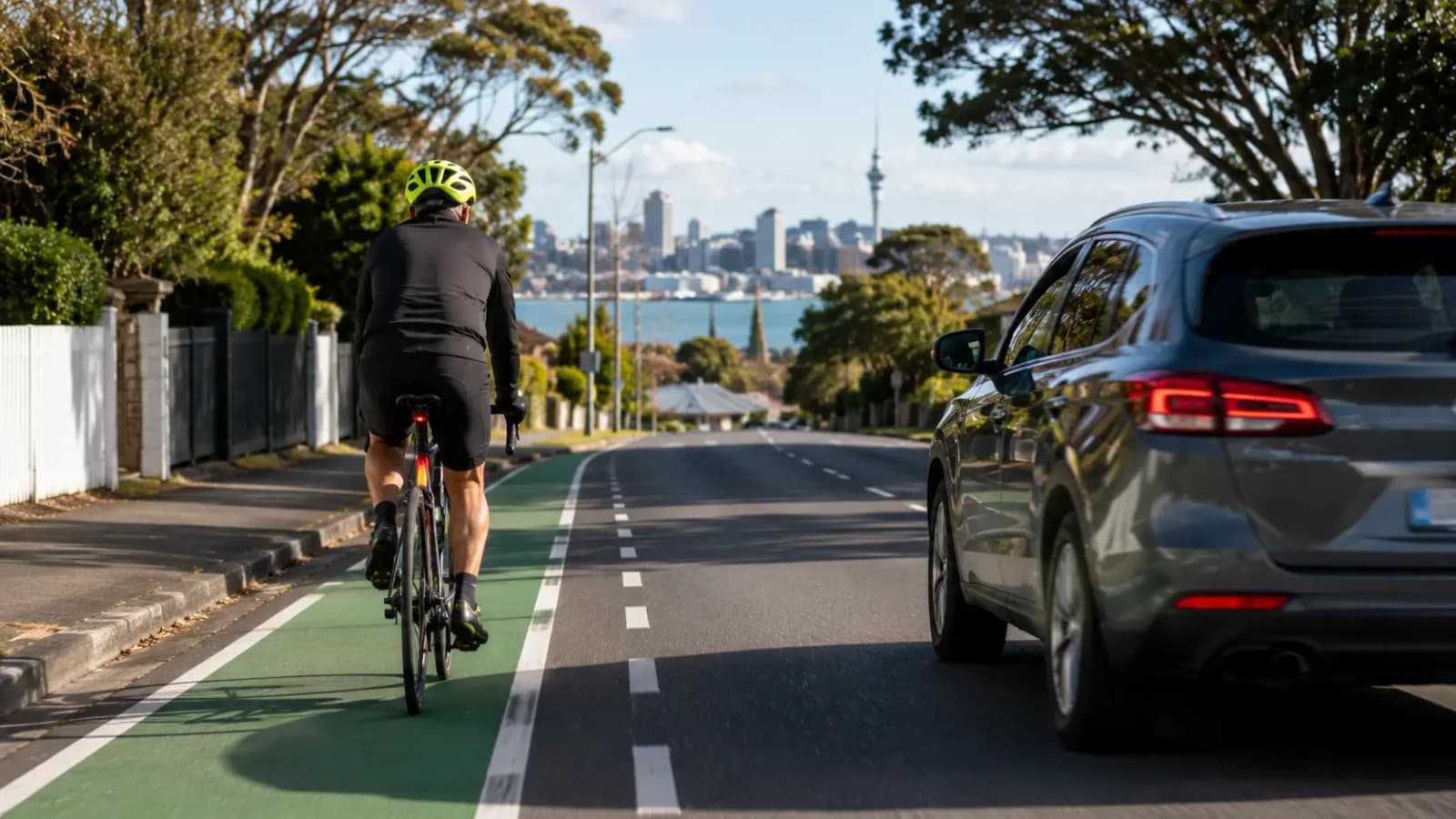
Most road-rule changes arrive without a face attached. New Zealand’s new 1.5-metre passing rule has one. It started with an Auckland father who nearly gave up cycling for good.
On 2 July 2026 the Government confirmed that drivers will have to leave at least 1.5 metres when overtaking a person on a bike, a horse rider or another vulnerable road user. It turns a passing distance that was accepted wisdom, but never required by law, into a legal minimum. The rule is expected to take effect later in 2026, once the regulatory process is complete.
The Week That Started It
The campaign behind that number began with a bad week. In 2018, the Safer Cycling Foundation says, four of the nine friends Ritesh Mani rode with were involved in crashes on Auckland roads inside a single week. Three were hit by vehicles.
“I considered quitting cycling. I’m a father, and I thought, this is quite dangerous.”
Ritesh Mani, founder, Safer Cycling Foundation
He did not quit. He started a foundation instead.
Six People, No Budget
The Safer Cycling Foundation is not a large organisation. It runs on a team of about six, mostly volunteers, with no institutional funding behind it. Its work runs wider than a single rule, across road-safety awareness, cycling education, community engagement and advocacy, but the passing distance became the campaign it is now known for.
What it had was a clear ask and the patience to keep repeating it: give cyclists 1.5 metres, then make 1.5 metres law. The message went out through social media, online polls, petitions and paid advertising, year after year, until it stopped sounding like a fringe request and started sounding like common sense.
Mani has always kept the argument human rather than statistical.
“Each person on that bike is a father, a mother, a brother, a sister, a child or a grandparent. That is a life on that bike, and we must treat them as vulnerable road users.”
Ritesh Mani, Safer Cycling Foundation
What Changed, and What It Costs a Driver
When the Government opened consultation on the cycling road rules early in 2026, more than 6,000 New Zealanders had their say. Transport Minister Chris Bishop confirmed the 1.5-metre rule in July.
The Foundation has always framed the change as small for the driver and large for the cyclist. “Sometimes all the driver needs to give the cyclist is another 20 seconds,” Mani says. “Sit back, give them time to move safely and, when you pass, leave plenty of distance. Then everyone gets home safely to their families.”
A Shared-Road Argument, Not a Fight

What has made the Foundation unusual is what it has refused to do. It has not run the campaign as cyclists versus drivers. Its case rests on shared responsibility and on the plain fact that the person on the bike is somebody’s family. That framing is easier to say than to hold onto across six years of advocacy, and it is probably part of why the ask eventually landed.
Mani is also quick to share the credit. “Other agencies eventually stepped in and helped drive it over the line,” he says. “At that point, we felt we had done our job.”
A rule is only as good as its enforcement, and 1.5 metres will mean nothing to a driver who never thinks about it. But the number is in the road code now, which is more than most grassroots campaigns ever manage. For Mani, the real reward sits further down the road than the traffic in front of him.
“There are going to be cyclists who are not even born yet who will be protected by these changes. To me, that is really special.”
Ritesh Mani, Safer Cycling Foundation
You can read more about the Foundation’s work at safercycling.org.nz.