Off the Map: The Kiwi Businesses Google Barely Shows
The good local operators have not vanished. They are still busy, still the first name a local gives you. They have just become hard to find for anyone who is not already a local.
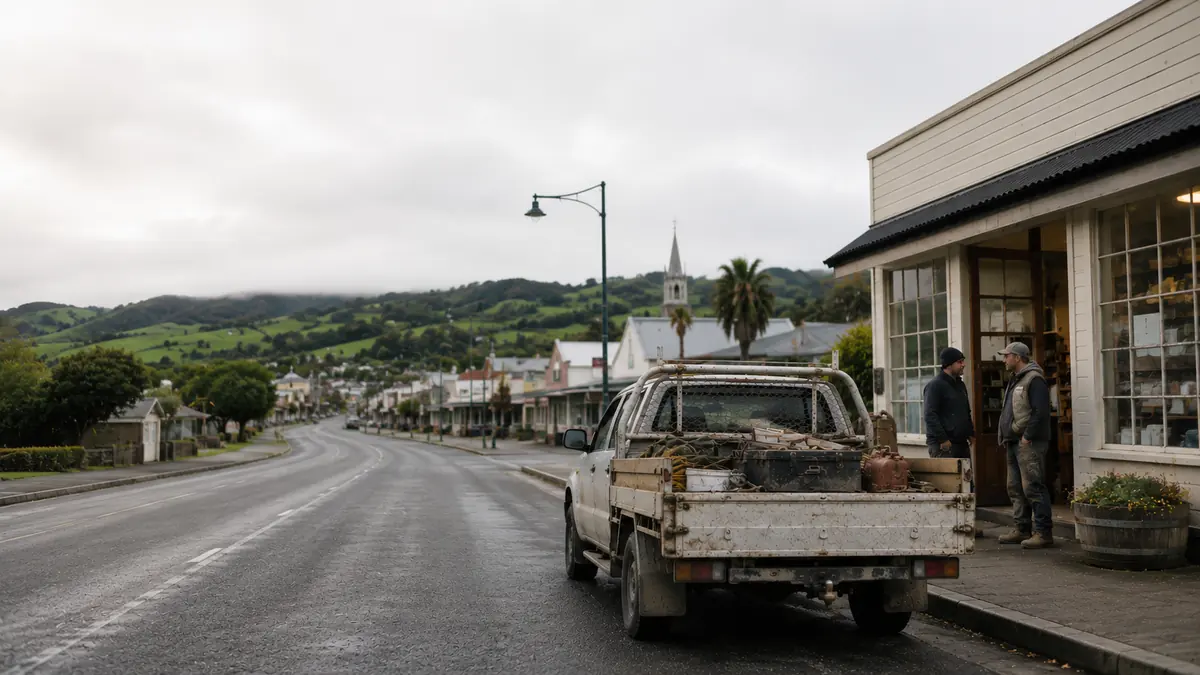
Ask anyone in a small New Zealand town for a good drainlayer and you will get a name in about four seconds. Ask Google the same question and you might get a franchise two towns over, a lead-generation site that sells your details on and three results that closed years ago. The person who actually turns up, does the job and charges a fair price is often nowhere near the top. Sometimes they are not there at all.
This is the quiet problem with how we find businesses now. The good ones have not vanished. They are still busy, still the first name a local gives you. They have just become hard to find for anyone who is not already a local.
The Front Door Moved
It used to be simpler, if less convenient. Every home had a phone book. Every region had a paper. Neither was perfect and neither was neutral, the Yellow Pages sold bold listings and bigger boxes to whoever paid, but they had one useful quality. They listed nearly everyone. If you existed, you were in there somewhere.
Then the phone book stopped landing on the doorstep, the regional papers thinned out or closed, and finding a business became one thing: a search on Google. That is not a complaint. Maps is genuinely good, and free to be listed on. The issue is what a search rewards. Google favours the businesses that are already prominent, the ones with a pile of reviews, a tidy website and the time to keep it current. That is a well-run city firm. It is not the sole-trader sparky who is flat out and has never thought about his search ranking.
And the front door is moving again. More of us now ask an AI for the recommendation, and these tools do not knock on doors or ask the neighbours. Their answer is only as good as what they can find written down. They repeat what is already published in a form a machine can read.
“A business that left no clear trail online is not ranked low in the answer. It is left out of it.”
It is also why your own website, on its own, only gets you so far. One site is a single source vouching for itself. Google and the AI tools prefer businesses they can confirm in more than one place, the same name, address and phone lining up across a directory, a map and a review page. That is part of how they decide you are real, and how they find you at all.
Nineteen in Twenty
We see this from an unusual angle. We've kept Business Directory NZ, a directory of New Zealand businesses, since 2022, 13,000+ of them, spread from Kaitāia to Bluff. Here is the part that tells the story: nineteen in twenty (95%), more than 9,000, have never claimed their own entry. They did not add themselves. Someone had to index them one by one, from public records and council data and their own quiet corners of the internet, because they were not putting themselves anywhere a customer could easily find them.
You might think not claiming a directory matters little. Plenty of these businesses have a Google pin and a phone number. But a pin and little else is the problem: it turns up for the person who already knows the name, and stays hidden from everyone else. These are healthy businesses run by people with better things to do than tend a profile. The gap is real all the same.
Why a List Still Matters
A directory does one boring thing a search engine does not. It lists everyone, sorted by what they do and where they are, whether or not they market themselves. Pull up the plumbers and the one with no website sits on the same page as the one with the big ad budget. Prominence is not the entry price, and the searcher gets to see both. Not clever, not new, just complete in a way the open web has quietly stopped being.
We should be straight about our own hand here. We run one of these directories, and yes, businesses can pay to feature higher on it. So take the argument with a pinch of salt. But it stands whether we make it or someone else does. When the only way to be found is to win at search, the businesses worst at marketing, or that cannot afford it, go invisible, and those are often the ones a town relies on most.
Which brings us back to that drainlayer, the one a local can name in four seconds and a search engine cannot find at all. He is not a failing business. He is a good one that never learned to shout, and the way we look for things now punishes exactly that. A main street is only as strong as the businesses on it, and a business nobody can find is already halfway to closed.
A plain, complete list will not fix that overnight. But it puts him back in front of the stranger, not just the neighbour who already knew the name. If you run one of those businesses, you can claim your own entry for nothing and get the details right. A small thing. Also, more and more, the whole difference between getting the call and being the third dead link.